
Business Card Printing in Australia: A Complete Guide for Businesses and Resellers
Everything you need to know about business card printing in Australia — formats, finishes, MOQs, suppliers, and tips for resellers and marketing agencies.

Written by
Harriet Cole
Stationery & Office
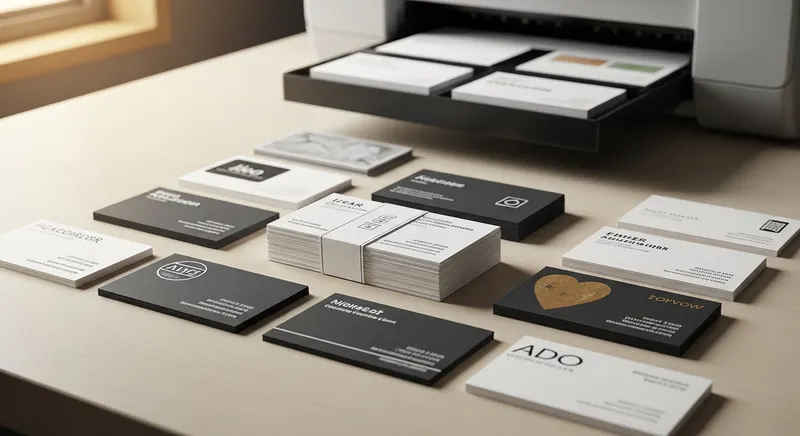
Business cards have survived every wave of digital disruption — from email to LinkedIn to QR codes — and they continue to be one of the most enduring, cost-effective branding tools available to Australian businesses. Whether you’re a marketing agency sourcing printed collateral for a client, a reseller building out your product catalogue, or a business owner wanting to make a strong first impression at your next networking event, understanding the fundamentals of business card printing will help you get better results, avoid costly mistakes, and deliver genuine value. This guide covers everything from paper stocks and finishes to minimum order quantities, turnaround times, and how business card printing fits into a broader branded stationery strategy.
Why Business Cards Still Matter in 2026
It might seem counterintuitive in an increasingly digital world, but business cards remain a powerful physical touchpoint. Handing someone a well-designed, quality-printed card creates a tangible moment of connection that a LinkedIn profile simply cannot replicate. For Australian businesses attending trade shows in Sydney, networking breakfasts in Melbourne, or industry conferences on the Gold Coast, a professionally printed business card signals credibility and attention to detail.
For resellers and marketing agencies, business cards are also an easy upsell. Clients who order branded merchandise — custom uniforms, branded bags, or promotional products — often need printed collateral to match. Positioning business card printing as part of a complete branding solution increases your average order value and makes you a more valuable partner.
Beyond networking, business cards serve practical functions: they’re left at reception desks, included with product deliveries, handed out at retail counters, and tucked into event showbags. Their utility hasn’t diminished. What has changed is the expectation of quality — clients and customers in 2026 expect premium finishes and thoughtful design, not a flimsy card with a pixelated logo.
Understanding Business Card Printing Formats and Sizes
Before placing an order, it’s worth understanding the options available. Standard business cards in Australia are typically printed at 90mm x 55mm, which fits comfortably into wallets and card holders. However, suppliers can accommodate a range of non-standard formats depending on your brief.
Standard vs. Non-Standard Sizes
The standard 90 x 55mm format remains the most popular because it’s compatible with card holders and wallets universally used across Australia and internationally. Square cards (55 x 55mm) have gained traction among creative industries, particularly in cities like Melbourne and Brisbane where design-forward branding is popular. Slim cards (90 x 45mm) are another option that stand out in a pile without being awkward to store.
For resellers pitching to clients, it’s worth stocking options across a range of formats. Offering non-standard sizes adds perceived value and gives clients a genuine point of differentiation.
Single-Sided vs. Double-Sided Printing
Single-sided printing is less common than it used to be. Most modern business card orders opt for double-sided printing, using the reverse to include additional information such as a tagline, social media handles, a QR code, a map, or a secondary language. Double-sided printing adds minimal cost at volume but significantly increases the card’s usefulness.
Paper Stocks, Weights, and Finishes
This is where business card printing gets genuinely interesting — and where quality can make or break a first impression. Choosing the right paper stock and finish is one of the most important decisions in the entire process.
Paper Weight
Business cards are typically printed on stocks ranging from 300gsm to 450gsm. A 350gsm card is considered a solid mid-range option — it has a reassuring weight without feeling over-engineered. Premium cards often use 400gsm or higher, which conveys quality and durability. Anything below 300gsm will feel flimsy and is generally not recommended for client-facing applications.
Lamination Options
Lamination protects the printed surface and dramatically changes the tactile experience of holding the card:
- Gloss lamination produces a high-shine, vivid finish that makes colours pop. It’s popular for photography, hospitality, and consumer-facing businesses.
- Matte lamination creates a smooth, non-reflective surface that feels premium and contemporary. It’s widely favoured in corporate and professional services sectors.
- Soft-touch lamination (sometimes called velvet lamination) is one of the most luxurious finishes available. It has a velvety, slightly rubbery feel that genuinely impresses when handed over in person.
Specialty Finishes
Spot UV coating allows you to apply a high-gloss varnish to specific areas of the card — your logo, for example — while the rest remains matte. The contrast is striking and creates a tactile effect that’s hard to miss. Foil stamping in gold, silver, or rose gold is another premium option that elevates the perceived value of the card significantly.
For businesses looking to align their printed materials with a wider commitment to sustainability, recycled paper stocks and uncoated finishes are increasingly available and worth exploring. This ties in well with a broader sustainable products strategy that resonates with environmentally conscious clients.
Decoration Methods and Artwork Requirements
Most business cards are produced via digital offset printing, which delivers sharp, colour-accurate results at competitive pricing. Lithographic printing is used for very high-volume runs where consistency across thousands of units is paramount.
Setting Up Artwork Correctly
Poor artwork is the most common cause of delays in business card printing. Here’s what to get right:
- Resolution: Supply artwork at a minimum of 300dpi. Images sourced from websites (typically 72dpi) will print blurry.
- Colour mode: Use CMYK, not RGB. RGB is for screens; CMYK is for print. If your client has provided an RGB file, it will need to be converted before printing.
- Bleed and safe zone: Include at least 3mm of bleed beyond the card edge. Keep critical text and logos at least 3mm inside the trim line to avoid being cut off during production.
- Fonts: Outline all fonts before submitting files, or embed them, to avoid font substitution issues.
- PMS matching: If your client has strict brand colour standards, confirm whether the supplier supports PMS (Pantone Matching System) spot colour printing or whether they print CMYK only. CMYK approximations of Pantone colours can vary noticeably.
Minimum Order Quantities, Pricing, and Turnaround
Business card printing is one of the few product categories where pricing drops dramatically at volume. Understanding the pricing tiers helps resellers structure their offering effectively.
Typical MOQs and Pricing Tiers
Most Australian suppliers set a minimum order of 100 cards, though some accept smaller quantities at a premium rate. Common pricing tiers are:
- 100–250 cards: Higher unit cost, suitable for individual professionals or startup businesses.
- 500 cards: The most popular quantity for small businesses. Cost per card drops significantly.
- 1,000 cards: Ideal for established businesses, sales teams, or bulk reseller orders.
- 5,000+ cards: Large organisations, franchises, and resellers ordering for multiple clients benefit from economies of scale at this level.
Turnaround Times
Standard turnaround for business card printing in Australia is typically 3–5 business days from approved proof. Express services offering 1–2 business day turnaround are available from most major suppliers at a premium. When managing client expectations, always add a buffer for artwork revisions and proof approval — these steps can add 1–2 days to the overall timeline.
Business Card Printing as Part of a Broader Stationery Strategy
Business cards rarely exist in isolation. Most organisations benefit from a cohesive suite of branded stationery — and for resellers and marketing agencies, this represents a significant opportunity to grow client relationships and revenue.
When a client orders business cards, consider what other stationery items complement them. Custom notebooks and branded pens are natural companions, and our broader stationery guide covers the full range of options available to Australian businesses. Branded stickers are another low-cost, high-impact product that pairs well with business card orders, particularly for product-based businesses and online retailers.
Looking beyond paper products, business card orders often accompany broader merchandise requests. A corporate client rolling out new branding might simultaneously need business cards, custom water bottles, branded tote bags, and umbrellas for wholesale for their sales team. Understanding your client’s full brief from the outset positions you as a strategic partner rather than a transactional printer.
Tech accessories are another strong complement for corporate clients. Branded USB-A chargers and solar power banks make excellent gifts to accompany a business card order at client meetings or events. For clients attending trade shows or expos, pairing printed collateral with practical giveaways significantly increases brand recall.
Seasonal campaigns are worth considering too. Business cards ordered for a summer activation or promotional event in Melbourne work well alongside summer promotional products and outdoor merchandise. For end-of-year gifting, pairing business card printing with Secret Santa gifts or branded hospitality items like personalised tea towels adds a personal touch that clients appreciate.
For resellers working with sporting clubs or school communities, business cards for coaching staff or administration can be bundled alongside items like soccer balls with logo printing or personalised towels as part of a seasonal ordering package.
Tips for Resellers and Marketing Agencies
If you’re reselling business card printing services, here are several practical considerations to keep in mind:
Build a markup into your pricing transparently. Resellers typically apply a 20–50% margin on print services. Ensure your pricing accounts for artwork handling time, client communication, and proof management — these are real costs even if they feel invisible.
Create a simple client briefing template. Capture key information upfront: card size, quantity, finish, delivery address, and artwork files. A structured brief reduces back-and-forth and speeds up the order process.
Offer a sample service. Many suppliers provide unprinted paper samples or stock samples so clients can feel the difference between lamination options before committing. This is particularly valuable for premium orders where the tactile quality of the card is central to the brief.
Understand your supplier’s artwork requirements thoroughly. Nothing damages a client relationship faster than a reprint caused by a supplier rejecting artwork that you approved. Know your supplier’s specs inside out and validate every file before submission.
Bundle with complementary products. As discussed above, business cards are a gateway product. Clients who trust you with their printed collateral are often open to exploring branded merchandise. Don’t underestimate the cross-sell potential of items like insulated tote bags, flat water flasks, or branded caps.
Conclusion: Key Takeaways for Business Card Printing in Australia
Business card printing remains one of the most valuable, versatile, and accessible branded products available to Australian businesses — and one of the most reliable product categories for resellers and marketing agencies building their service offering.
Here are the key takeaways from this guide:
- Paper stock and finish matter enormously. A heavier card with quality lamination or specialty finishes elevates a brand’s credibility and creates a memorable physical impression.
- Artwork setup is where most projects go wrong. Always supply CMYK files at 300dpi with correct bleed and outlined fonts — and validate these requirements with your specific supplier before briefing your client.
- Volume drives value. Pricing drops significantly at 500 and 1,000 unit tiers; help clients understand that ordering more up front is almost always the more cost-effective choice.
- Business card printing works best as part of a broader strategy. Bundle it with complementary stationery, branded merchandise, and promotional products to deliver a complete brand experience and increase your order value.
- Turnaround requires realistic planning. Factor in artwork revision time and proof approval when setting client deadlines — standard production is 3–5 business days from approved proof.
Whether you’re sourcing for a single client in Canberra or managing a national rollout for a franchise network, getting your business card printing process right is a foundational skill for anyone in the promotional products and branded merchandise space.