
How to Evaluate Promo Brands and Choose the Right Promotional Supplier in Australia
Discover how to assess promo brands, compare suppliers, and source quality branded merchandise for your business or clients in Australia.

Written by
Amara Okafor
Branding & Customisation
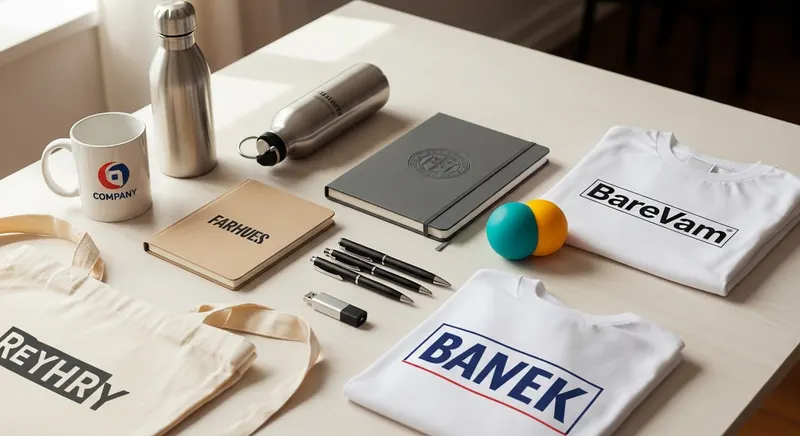
Choosing the right promo brands to work with can make or break your branded merchandise strategy. Whether you’re a marketing agency sourcing products for a major client campaign, a reseller building out your supplier network, or a business manager tasked with ordering conference giveaways before a tight deadline, the supplier landscape in Australia can feel overwhelming. There are hundreds of options, varying quality levels, and a dizzying range of products — from custom water bottles and tote bags to tech accessories and workwear. This guide cuts through the noise, giving you a practical framework for evaluating promo brands, understanding what separates the good from the great, and building supplier relationships that actually serve your needs in the long run.
What Are Promo Brands and Why Do They Matter?
In the promotional products industry, the term “promo brands” typically refers to two distinct things: the manufacturers and suppliers who produce customisable branded merchandise, and the quality tiers or product lines within those supplier catalogues. Understanding this distinction is important, particularly for resellers and agencies who are sourcing on behalf of clients.
When a Sydney-based marketing agency orders branded merchandise for a healthcare client’s national conference, they’re not just choosing products — they’re choosing promo brands that reflect the client’s reputation. A poorly made pen that breaks after a week, or a promotional USB flash drive with inconsistent print quality, sends exactly the wrong message. On the other hand, a well-chosen supplier who delivers on time, matches PMS colours accurately, and provides clean product proofs builds long-term trust.
Promo brands matter because they represent the supply chain behind every piece of branded merchandise your clients and customers will see, touch, and use. The better you understand the supplier landscape, the more confidently you can make recommendations, manage expectations, and protect your professional reputation.
Key Factors to Evaluate When Comparing Promo Brands
Not all promotional product suppliers are created equal. Here’s what to look for when you’re vetting potential promo brands for your supply chain.
Product Range and Specialisation
Some suppliers are generalists — they carry everything from insulated tote bags to personalised towels and stickers. Others specialise in a particular category, such as drinkware, apparel, or tech accessories. Specialists often offer deeper product knowledge, better quality control within their niche, and more decoration options for their category.
For a reseller servicing diverse industries, working with a mix of generalist and specialist suppliers gives you flexibility. For example, you might use a specialist drinkware supplier for a gym chain ordering protein shaker bottles, while using a generalist for a school’s end-of-year merchandise bundle.
Minimum Order Quantities (MOQs)
MOQs vary significantly across the industry and can be a deal-breaker depending on your client’s needs. Some promo brands set MOQs as low as 25 units for certain products, while others require 500 or more for screen-printed items. If you’re sourcing personalised shot glasses for a boutique event or soccer balls with a club logo for a local sporting association, you need a supplier who can accommodate smaller runs without inflating the per-unit cost unreasonably.
Always confirm MOQs upfront, and ask whether the supplier charges setup fees separately — this is especially relevant for screen printing, pad printing, and embroidery, where setup costs can add $50–$150 per colour or location.
Decoration Methods and Quality
Decoration method matters enormously for both aesthetics and durability. Ask any prospective promo brand what decoration methods they offer in-house versus outsourced. In-house decoration generally means faster turnaround, better quality control, and fewer handoffs — all of which reduce the risk of errors.
For example, sublimation printing on shirts produces vibrant, full-colour results that are ideal for sporting clubs and event merchandise, but it only works on 100% polyester or polyester-blend fabrics. If a client wants a premium finish on a cotton polo, you’d look to embroidery or screen printing instead. A knowledgeable supplier should guide you through these trade-offs, not just take your order.
Similarly, if a client wants branded truck caps with a structured 3D embroidery design, the supplier needs to have proper digitising capabilities — otherwise the embroidery will look flat or distorted.
Turnaround Times and Reliability
In promotional products, timing is everything. A beautifully branded product that arrives two days after a conference is completely useless. When evaluating promo brands, ask for realistic turnaround estimates based on current production capacity, not best-case scenarios.
Standard turnaround in Australia is typically 10–15 business days from proof approval. Rush orders may be available for an additional fee, but not all products or decoration methods can be expedited. If your Brisbane-based agency is managing a product launch with a fixed event date, you need a supplier who will be transparent about timelines and communicate proactively if anything changes.
Check whether they ship from Australian warehouses or source from overseas — this dramatically affects delivery reliability and lead times, particularly for custom-decorated items.
Artwork and Proof Processes
A professional promo brand will have a clear artwork submission and proof approval process. Look for suppliers who:
- Accept vector files (AI, EPS, PDF) and can advise if your artwork isn’t suitable
- Provide digital proofs before production
- Offer PMS colour matching for brand-sensitive clients
- Clearly communicate any artwork fees or revision charges
This is particularly important when you’re managing branded merchandise for a corporate client with strict brand guidelines. A supplier who rushes to production without a signed-off proof is a liability.
Working With Promo Brands as a Reseller or Agency
If you’re a reseller or marketing agency, your relationship with promo brands is fundamentally different from that of an end-user business. You’re not just buying products — you’re building a supplier panel that you’ll rely on across multiple clients and campaigns.
Build a Diverse Supplier Panel
Don’t put all your eggs in one basket. Build a panel of three to five trusted promo brands that cover different categories and price points. For instance, you might have:
- A specialist eco-friendly supplier for clients who prioritise sustainability (think reusable grocery bags or solar-powered power banks)
- A tech accessories supplier for corporate and conference merchandise such as USB-A chargers and USB sticks
- A bags and totes supplier for retail, events, and trade shows — covering everything from promotional shopping bags to small cooler bags
- A seasonal and novelty supplier for campaigns like Secret Santa gifts or summer promotional products
This panel approach means you’re never scrambling to find a supplier for an unusual brief, and you can negotiate better pricing through consistent volume with each partner.
Negotiate Terms and Build Relationships
The best promo brands reward loyal reseller partners with trade pricing, priority production slots, and dedicated account management. Don’t be afraid to negotiate, especially once you’ve established a track record of consistent orders. Ask about:
- Reseller or trade accounts with tiered pricing
- Sample policies — can you order samples before committing to a full run?
- Credit terms for established accounts
- Co-op stock arrangements for high-volume products
A Melbourne-based agency that regularly orders flat water flasks and shopping totes for retail clients, for example, is in a strong position to negotiate favourable terms once they’ve demonstrated consistent volume.
Vet for Compliance and Ethical Sourcing
In 2026, clients are increasingly asking questions about where their merchandise is made and under what conditions. Responsible promo brands should be able to provide information about their supply chain, including factory audits, social compliance certifications (such as BSCI or SEDEX), and product safety testing relevant to Australian standards.
This is especially important for products that will be used by children — a Queensland primary school ordering merchandise has a right to expect that the products meet Australian safety standards.
Red Flags to Watch Out For
Even experienced buyers can be caught out by substandard promo brands. Watch for these warning signs:
- No digital proofs offered — production without proof approval is a recipe for disasters
- Unrealistically low pricing — if a price seems too good to be true, the quality or compliance may be compromised
- Vague turnaround commitments — “approximately 2–3 weeks” with no clear start date is not acceptable
- No Australian presence — suppliers with no local team, warehouse, or support can leave you exposed when things go wrong
- Poor communication — if it takes three days to get a quote response, imagine how they’ll handle a production issue
Conclusion: Choosing the Right Promo Brands for Your Business
Finding and maintaining relationships with the right promo brands is one of the most valuable investments you can make as a reseller, agency, or business buyer in the Australian promotional products market. It’s not just about finding the lowest price — it’s about reliability, quality, communication, and the confidence that comes from knowing your supplier will deliver what they’ve promised, when they’ve promised it.
Here are the key takeaways from this guide:
- Evaluate promo brands on product range, MOQs, decoration capabilities, turnaround times, and artwork processes — not just price
- Build a diverse supplier panel covering different product categories and price points, rather than relying on a single source
- Prioritise suppliers with Australian warehouses and local support to reduce delivery risks and improve accountability
- Ask about compliance and ethical sourcing — particularly for products destined for schools, government clients, or high-profile brands
- Invest in supplier relationships through consistent volume and clear communication — the best promo brands will reward loyal partners with better terms, faster service, and priority support
Take the time to properly vet your suppliers before you need them in a crunch, and you’ll build a merchandise supply chain you can trust across every client and every campaign.