
Bronze Medals for Events and Awards: The Complete Supplier Buying Guide
Discover how to source quality bronze medals in Australia for sporting events, corporate awards, and school competitions. Tips for resellers and businesses.

Written by
Diana Ruiz
Awards & Recognition
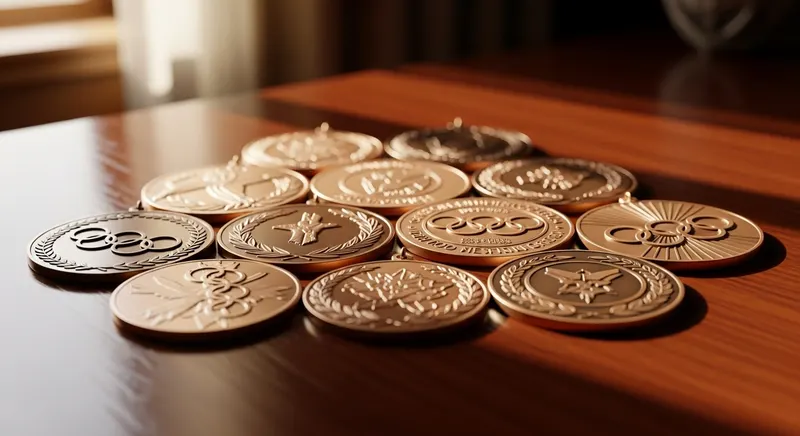
Ordering bronze medals sounds straightforward — until you’re deep into decisions about custom engravings, ribbon colours, minimum order quantities, and whether die-cast or zinc alloy actually makes a difference to your client. Whether you’re a reseller building out your awards and recognition catalogue, a marketing agency sourcing product for a client’s annual sporting event, or a business putting together a staff recognition programme, understanding the nuances of the bronze medal supply chain in Australia will save you time, money, and a last-minute panic phone call to your supplier.
Why Bronze Medals Remain a Staple in Australian Awards and Recognition
There’s a reason bronze medals haven’t gone out of fashion. They carry immediate symbolic weight — the podium finish, the acknowledgment of effort, the physical reminder of achievement. In a world increasingly dominated by digital recognition, a tangible medal pressed into someone’s hand at an awards ceremony carries meaning that a certificate or email simply cannot replicate.
Across Australia, demand for bronze medals is consistent and broad. Think of a Brisbane primary school organising its annual sports carnival, a Sydney community football club running its junior competition finals, a Perth corporate business hosting an internal innovation challenge, or a Melbourne university acknowledging student achievement at a graduation ceremony. All of these scenarios require medals — and all of them have different budget expectations, artwork requirements, and turnaround expectations.
For resellers and agencies, bronze medals sit comfortably within a larger awards and recognition offering. They pair naturally with trophies, ribbons, certificates, and branded merchandise like personalised towels for sporting events or custom soccer balls with a logo for junior league presentations. Understanding how to source them well is a genuine competitive advantage.
Understanding the Different Types of Bronze Medals Available
Not all bronze medals are created equal, and this is where suppliers often trip up clients who haven’t briefed their needs clearly. Let’s break down the main product types.
Die-Cast Zinc Alloy Medals
These are the most common and cost-effective option for high-volume orders. Die-cast zinc alloy medals are manufactured using a mould, which means they’re excellent for reproducing detailed artwork, logos, and text on the medal face. The “bronze” finish is typically achieved through electroplating — a copper-tin alloy coating applied over the zinc base. For most sporting clubs, school events, and corporate programmes with budgets in the mid-range, this is the sweet spot.
Solid Bronze Medals
True solid bronze medals are rarer and significantly more expensive. They’re typically reserved for prestigious competitions, high-end corporate awards, or collectors’ items. If a client is asking for something genuinely premium, solid bronze is a valid option, but most resellers will find the die-cast zinc alloy option covers 95% of their enquiries at a fraction of the price.
Stamped Metal Medals
Stamped medals are produced by pressing a flat metal sheet into a shape using a die. They tend to be thinner and lighter than die-cast options, which can work well for certain aesthetics — particularly minimalist, modern designs favoured by corporate clients. They’re also typically quicker to manufacture, which matters when turnaround is tight.
Spinning Insert Medals
A popular option for school sports days and community events, spinning insert medals feature a rotating centrepiece that can display custom artwork or a sport-specific icon. They offer an eye-catching, dynamic look without the premium price tag of fully custom die-cast production.
Key Customisation Options for Bronze Medals
Once you’ve settled on the base product type, customisation is where the real value-add happens for your clients. Here’s what to brief your supplier on.
Artwork and Engraving
Most bronze medals ordered through Australian suppliers will offer either relief embossing (raised artwork baked into the mould) or laser engraving (applied post-production). For fully custom medals with a client’s logo, relief embossing produces a far superior finish but typically requires higher minimum order quantities — often 50 to 100 units minimum — and a mould setup fee that can range from $150 to $500+ depending on complexity.
Laser engraving is ideal for adding personalised details like athlete names, event years, or specific category text to stock or semi-custom medals. It’s cost-effective at smaller quantities and has a clean, precise look that most clients are happy with.
Ribbon Colours and Attachments
The ribbon is often an afterthought, but it’s actually a strong branding opportunity. Most suppliers offer a range of stock ribbon colours and can provide custom satin ribbons in PMS-matched colours for larger orders. Custom ribbon typically requires a minimum quantity of around 100 metres, so it’s worth grouping across multiple orders if possible.
Other attachment options include pin backs (popular for corporate lapel-style awards), clasps, and carabiners for a sporty feel.
Coloured Enamel Fill
Adding coloured enamel to recessed areas of a die-cast medal is one of the most effective ways to create a premium, visually striking result. It allows club colours, corporate brand colours, or event logos to pop against the bronze finish. Enamel filling does add to production cost and lead time, so factor this into your quotes.
Sourcing Bronze Medals in Australia: What Resellers Need to Know
Working with the right supplier is half the battle. Here’s what experienced resellers consistently flag as important when sourcing bronze medals for their clients.
Minimum Order Quantities
Stock medals (off-the-shelf designs with basic customisation like engraving) can often be ordered in quantities as low as 10 to 25 units. Fully custom die-cast medals with unique artwork and mould production typically start at 50 units minimum, with some suppliers requiring 100+. Understanding this upfront prevents awkward conversations with clients who expect 20 fully custom medals for a niche internal award.
Lead Times and Turnaround
For resellers managing client expectations, this is critical. Stock medals with laser engraving can often turn around in 5 to 10 business days. Fully custom die-cast production, however, typically requires 3 to 6 weeks — and longer if the order is being manufactured offshore (which is common for die-cast products). Always confirm whether your supplier is holding local stock or producing to order, particularly for clients in regional areas like Darwin, Hobart, or Cairns where freight adds additional time.
Pricing and Margin Considerations
Bronze medals offer solid margin potential for resellers, particularly on medium to large orders. Unit pricing drops significantly with volume — a die-cast medal that might cost $8–$12 per unit at 50 pieces can often come down to $4–$6 at 200+ pieces. Setup fees (for moulds and laser engraving files) are usually one-time costs, which makes repeat orders highly profitable.
When building quotes, always clarify whether the supplier’s pricing includes ribbons, presentation boxes, or individual packaging — these elements add cost but also add perceived value that justifies a higher sell price to the end client.
Artwork Requirements
Most suppliers will require vector artwork (AI, EPS, or high-resolution PDF) for medal production. Brief your clients early on this requirement. For engraving specifically, clean single-colour vector files work best. Complex gradients, drop shadows, and fine details can be problematic at small medal diameters (typically 50mm to 70mm). If your client’s logo is complex, your supplier’s design team may need to simplify it — this is worth confirming before production begins.
Pairing Bronze Medals with Complementary Products
Savvy resellers know that a medal order is rarely just a medal order. When a sporting club in Adelaide comes to you for bronze medals for their winter season presentations, that’s an opportunity to propose a full event merchandise package.
Consider pairing medals with custom printed water bottles for athlete gift packs, personalised insulated tote bags for coaches and officials, or branded soccer balls for club promotions. For corporate recognition events, bronze medals might sit alongside personalised shot glasses for a gala dinner, or custom USB drives loaded with event content for attendees.
For school events, consider supplementing the medal order with fun extras like custom stickers for participant packs, or promotional shopping bags for goodie bags that parents and students take home. Even smaller add-ons like branded water flasks or protein shaker bottles can round out a sports day merchandise bundle and increase your overall order value.
If the event has a sustainability angle — increasingly common for corporate clients and councils — consider suggesting reusable grocery bags or solar-powered merchandise as part of the recognition package alongside the medals.
Timing Your Bronze Medal Orders Around the Australian Calendar
Events drive bronze medal demand, and in Australia that demand follows a predictable seasonal rhythm. School sports carnivals cluster in Terms 1 and 3. Sporting club presentations typically run from June through September for winter codes, and September through November for summer codes. Corporate awards season heats up in Q4, with end-of-year functions running October through December in Sydney, Melbourne, Brisbane, and beyond.
For resellers, this means forecasting and early client conversations are essential. Clients who come to you six weeks before their presentation night with a fully custom brief are in a much better position than those arriving with two weeks’ notice. Building calendar reminders into your client management process — and proactively reaching out before peak periods — is one of the most effective ways to avoid rushed orders and protect your margins.
For context on complementary seasonal planning, our guide to summer promotional products in Melbourne covers the broader merchandise landscape during the peak events season.
Conclusion: Key Takeaways for Sourcing Bronze Medals
Bronze medals are a dependable, high-demand product category that rewards resellers and businesses who understand the details. Here’s a summary of the most important points to carry into your next brief:
- Know your product type before quoting — die-cast zinc alloy covers most use cases, but spinning insert, stamped, and solid bronze all serve specific needs. Clarify the client’s expectations early.
- Lead times are your biggest risk — fully custom die-cast bronze medals require 3–6 weeks minimum. Always set expectations upfront and build buffer time into your project plan.
- Artwork readiness drives timelines — vector files are non-negotiable for quality results. Brief clients on this requirement at the start of every engagement.
- Bundle medals with complementary products — event merchandise packages that include medals alongside apparel, drinkware, and bags increase order value and make you a one-stop shop for your clients.
- Plan around the Australian events calendar — proactive outreach before peak sports and corporate awards seasons positions you ahead of competitors and helps clients avoid rushed, expensive last-minute orders.
Bronze medals may be one of the most traditional items in the awards and recognition space, but sourced well and presented thoughtfully, they remain one of the most impactful products you can put into a client’s hands.