
How to Choose the Right Promotional Products Supplier in Australia
Find the right promotional products supplier in Australia with this expert guide for businesses, resellers, and marketing agencies.

Written by
Amara Okafor
Branding & Customisation
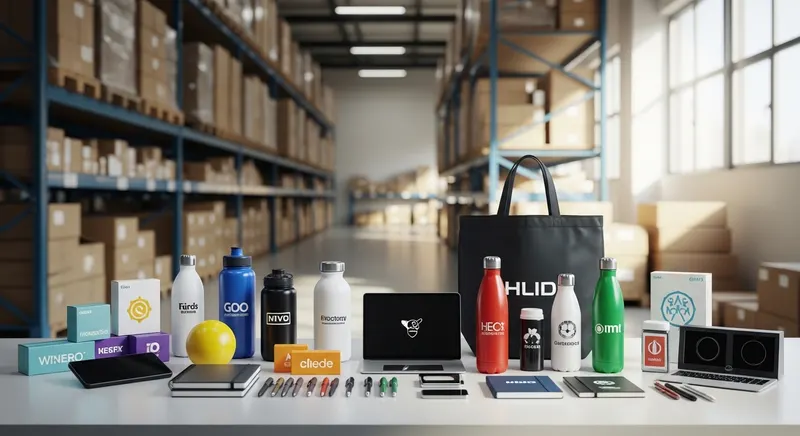
Choosing the right promotional products supplier can be the difference between a campaign that genuinely moves the needle and one that leaves you with a warehouse full of disappointing merchandise. Whether you’re a marketing agency managing client briefs, a business owner looking to make a splash at your next trade show, or a reseller building out your product catalogue, the supplier you partner with shapes every aspect of the outcome — from print quality and product range to turnaround times and customer service. Getting this decision right from the start saves significant time, money, and stress down the track.
What Does a Promotional Products Supplier Actually Do?
Before diving into how to choose one, it’s worth clarifying what a promotional products supplier actually offers. At its core, a supplier sources, decorates, and fulfils branded merchandise — products that carry your logo, tagline, or custom artwork. This could be anything from custom water bottles distributed at a Sydney corporate conference to insulated tote bags handed out at a Melbourne sustainability expo.
A quality supplier typically handles:
- Product sourcing — maintaining a catalogue of blanks across multiple categories
- Decoration and customisation — applying your branding via screen printing, embroidery, sublimation, laser engraving, pad printing, or heat transfer
- Artwork management — reviewing files, providing proofs, and ensuring colour accuracy
- Order fulfilment — packaging and dispatching goods to your specified location or directly to end recipients
Some suppliers specialise in a single category, such as apparel or drinkware. Others are full-service distributors offering hundreds of product lines. For businesses and resellers with diverse needs, a broader supplier is generally more practical — though specialist suppliers can deliver exceptional results when you have a clear, focused brief.
Key Factors to Evaluate When Comparing Suppliers
Not all promotional products suppliers are created equal. The following criteria will help you separate the reliable partners from the ones who look good on paper but fall short on delivery.
Product Range and Category Depth
A strong supplier should offer genuine depth across multiple product categories. If you’re sourcing merchandise for an event in Brisbane or a retail activation in Perth, you want access to a wide range of items — from promotional USB sticks and solar-powered power banks to personalised towels and branded soccer balls.
Ask potential suppliers how frequently they update their catalogue, whether they can source custom or hard-to-find items, and what their minimum order quantities look like across different product types. MOQs vary considerably — screen-printed t-shirts might start at 12 units, while custom stickers often have much lower entry points.
Decoration Capabilities and Quality Standards
The decoration method used has a direct impact on how your branding looks and how long it lasts. A supplier offering only one or two decoration options is limiting your choices. Look for suppliers who can offer:
- Embroidery — ideal for polos, caps, and workwear, including trucker caps
- Screen printing — cost-effective for high-volume runs on apparel
- Sublimation — excellent for full-colour, all-over prints, as explored in our guide to shirts with sublimation printing
- Laser engraving — premium finish for metal and wood products, trophies, and awards
- Pad printing — widely used for smaller items like pens and USB chargers
Always request a physical sample before committing to a large run. A reputable supplier will offer sample ordering, even if there’s a nominal cost involved.
Turnaround Times and Production Lead Times
This is where many organisations get caught out. Standard production across most categories runs between 10 and 15 business days once artwork is approved — but that window can stretch significantly during peak periods like end of financial year, Christmas, and the lead-up to major sporting events. If you’re ordering summer promotional products ahead of a December campaign in Melbourne, you need to factor in those timelines carefully.
Always ask suppliers:
- What is the standard production lead time for this product?
- Do you offer rush or express services, and at what additional cost?
- What’s the cutoff for orders placed after a certain date during peak periods?
Turnaround transparency is a hallmark of a trustworthy supplier.
Pricing, Minimum Order Quantities, and Setup Fees
Promotional products pricing is rarely as simple as a per-unit cost. Most suppliers charge setup fees for artwork configuration, screen preparation, or embroidery digitising. These can range from $50 to $200 depending on the product and decoration method.
Bulk pricing tiers are standard — the more you order, the lower the unit cost. For a reseller managing client accounts, understanding how these tiers work helps you build accurate quotes and protect your margin. A typical pricing structure might look like:
- 50 units: $8.50 each
- 100 units: $6.80 each
- 250 units: $5.20 each
- 500 units: $4.10 each
When comparing quotes across suppliers, always ensure you’re comparing apples with apples — some quotes include GST, freight, and setup fees while others do not.
Working With Suppliers as a Reseller or Marketing Agency
For resellers and marketing agencies, the supplier relationship is especially critical. You’re not just purchasing products — you’re leveraging the supplier’s capabilities to deliver results for your own clients. A few considerations specific to this audience:
Trade Accounts and Wholesale Access
Many Australian promotional products suppliers offer dedicated trade or wholesale accounts with better pricing, dedicated account managers, and access to exclusive product lines. If you’re placing regular orders, it’s worth enquiring about trade pricing structures, credit terms, and whether the supplier offers blind drop-shipping (delivering directly to your client without their branding on the packaging).
Artwork and Proof Management
Efficient artwork management is vital when you’re working to client deadlines. Suppliers who offer clear proof approval processes — with digital sign-off before production commences — reduce the risk of costly errors. Make sure your supplier can work with standard file formats (AI, EPS, PDF) and offers PMS colour matching where brand consistency is non-negotiable.
Product Versatility for Diverse Campaigns
Marketing agencies often need to pivot between very different campaign types. One month you might be sourcing personalised shot glasses for a hospitality client’s bar night. The next, you’re organising promotional shopping bags for a grocery retailer’s sustainability push — perhaps even reusable grocery bags made from recycled materials. A supplier with genuine versatility means you’re not managing five different supplier relationships simultaneously.
Eco-Friendly and Sustainable Product Options
Sustainability is no longer a niche consideration — it’s a mainstream expectation, particularly for government clients, councils, charities, and organisations with published ESG commitments. When evaluating suppliers, ask specifically about their sustainable product range.
Look for suppliers stocking products made from bamboo, recycled PET, organic cotton, or other certified sustainable materials. Categories worth exploring include reusable insulated bags, flat water flasks with a lower environmental footprint, and other genuinely reusable items that replace single-use alternatives.
Be cautious of greenwashing — vague terms like “eco-friendly” mean very little without certification or material transparency. A credible supplier will be able to provide product specifications and material sourcing details on request.
Red Flags to Watch for When Evaluating a Promotional Products Supplier
Even with due diligence, it’s possible to partner with the wrong supplier. Here are some warning signs:
- No sample availability — any legitimate supplier should be willing to provide samples
- Vague lead times — “a few weeks” is not an acceptable answer
- No written proof approval process — verbal sign-offs are a recipe for disputes
- Limited decoration options — this signals a narrow operation that may not scale with your needs
- No ABN or Australian business presence — particularly relevant if you’re dealing with offshore suppliers who don’t have local support
Trust your instincts. If a supplier is difficult to communicate with at the quoting stage, that experience rarely improves once they have your money.
Specialty and Niche Product Categories Worth Asking About
Beyond the mainstream, the best suppliers can often source niche or specialty items that help campaigns stand out. This might include:
- Branded protein shaker bottles for health and fitness clients
- Promotional recipe cards for food brands or cooking-related campaigns
- Custom shopping totes for retail or lifestyle brands
- Specialty items for Secret Santa gift campaigns run by HR teams across corporate offices in Adelaide, Canberra, or Hobart
These specialty items are worth mentioning during initial conversations with potential suppliers — their ability to accommodate unusual requests tells you a lot about their capabilities and willingness to problem-solve.
Conclusion: Choosing the Right Promotional Products Supplier
Finding the right promotional products supplier in Australia is a process that rewards patience and thorough due diligence. The best partnerships are built on transparent communication, reliable production timelines, strong decoration quality, and a product range that can genuinely serve your evolving needs.
Here are the key takeaways to guide your decision:
- Evaluate product breadth and decoration capabilities before committing — a supplier with only a few options will limit your campaigns
- Always request samples and insist on a written proof approval process before production begins
- Understand the full cost including setup fees, freight, and GST when comparing quotes
- Ask about trade accounts if you’re a reseller or agency — dedicated pricing structures can significantly improve your margin
- Prioritise transparency around lead times, especially if you’re ordering during peak periods or with tight deadlines
- Sustainability credentials matter — ask for material specifications, not just marketing language
Investing time upfront in selecting the right supplier pays dividends across every campaign you run. The right promotional products supplier isn’t just a vendor — they’re a genuine partner in helping your brand, or your clients’ brands, make a lasting impression.